If you’re trying to choose between north and south Coral Gables, you’re not alone. Many buyers know they want Coral Gables but are less sure which part of the city best fits their daily routine, style preferences, and long-term goals. The good news is that each side offers something distinct, and once you know what to look for, the decision becomes much clearer. Let’s dive in.
North vs. South Coral Gables
A good place to start is with one important point: Coral Gables does not use one official real estate definition for a north versus south split. The city’s police service areas reference geographies such as north of Bird Road to Coral Way, north of Coral Way, and south of US-1, so “north” and “south” are best understood as practical buyer shorthand rather than formal city districts.
That matters because Coral Gables is highly block-specific. Two streets that seem close on a map can offer a very different look, lot pattern, and day-to-day feel. In other words, the side of the city helps narrow your search, but the exact street still matters most.
What North Coral Gables Feels Like
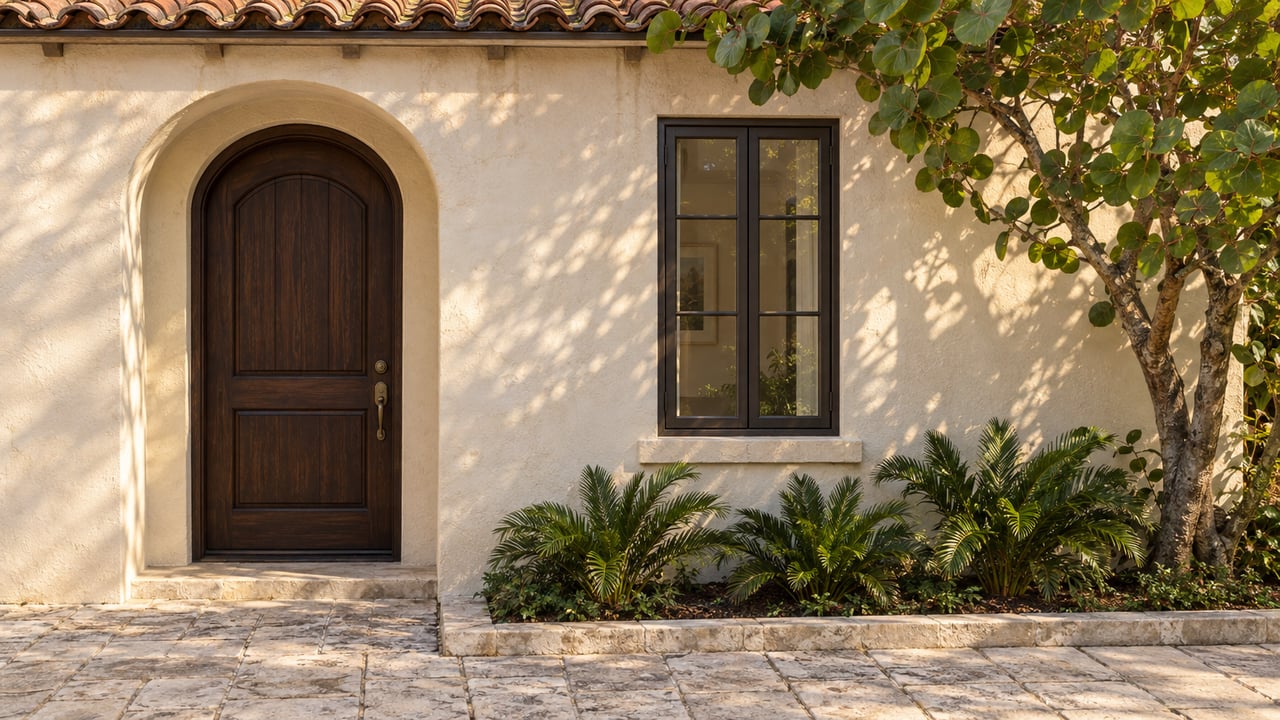
North and central Coral Gables tend to reflect the city’s classic identity most clearly. The city still defines Coral Gables Mediterranean Architecture as part of George Merrick’s original vision, and landmarks such as City Hall, the Merrick House, the Coral Gables Museum, the Douglas Entrance, the Biltmore Hotel, and the Venetian Pool all show that early architectural style.
For many buyers, this is the version of Coral Gables they picture first. You’ll often find a stronger sense of the city’s historic Mediterranean character here, along with a more traditional street grid and close proximity to the central commercial core.
Architecture in the North
If architectural character is high on your list, north and central Coral Gables often stand out. This part of the city is where you’re more likely to feel the original Merrick-era design language in a concentrated way.
That does not mean every home looks the same. It does mean many buyers are drawn here for the visual identity that feels most closely tied to the city’s historic image.
Lifestyle in the North
The north and central areas are especially appealing if you want easier access to a walkable commercial district. Miracle Mile, located on Coral Way between LeJeune Road and Douglas Road within the Central Business District, is described by the city as its main street and features Mediterranean-style buildings, outdoor cafés, boutiques, and international cuisine.
Giralda Plaza adds to that experience with a pedestrian restaurant corridor that includes bars and coffee shops. The city also notes that Miracle Mile has more than 120 international restaurants, which helps explain why this side of Coral Gables often feels more dining- and activity-centered.
What South Coral Gables Feels Like
South Coral Gables has a different rhythm. Rather than centering on one classic downtown spine, this part of the city often feels more open, more varied in architecture, and more connected to waterfront and nature-oriented amenities.
For some buyers, that shift is exactly the appeal. If you value privacy, larger parcels in certain areas, or daily convenience around the University of Miami, Old Cutler Road, or the South Miami corridor, the south side may be the better fit.
Architecture in the South
South of US-1, the architectural story becomes more varied. The city notes that the MacFarlane Homestead and Golden Gate subdivisions were south-of-US-1 neighborhoods, and homes there were built in shotgun and bungalow styles common to the Bahamas.
The city also describes private residences in MacFarlane Homestead as wood-frame vernacular homes not seen elsewhere in Coral Gables. That gives parts of the south side a historically important identity that feels noticeably different from the Mediterranean core found farther north.
Lifestyle in the South
The south side is less about a single concentrated main street and more about destination shopping, corridor access, and open space. Shops at Merrick Park, located at 358 San Lorenzo Ave., serves as a major open-air shopping and dining destination with major retailers and restaurants.
This side of the city can also be practical for buyers whose routine revolves around the University of Miami, nearby medical offices, or trips through the South Miami area. The city launched a Southern Loop trolley pilot in November 2025 running from Douglas Road Metrorail Station to Red Road via Ponce de Leon to improve access to UM, medical offices, schools, and other community hubs.
Lot Sizes and Home Sites
One of the clearest differences buyers notice is lot size, but it is not uniform across either side of the city. In a City of Coral Gables Blue Ribbon Committee transcript, a board chair noted that most single-family lots are platted at 50 by 100 feet.
At the same time, lot sizes can vary dramatically. County records show smaller Coral Gables grid parcels such as 25 by 110 feet, while a Miami-Dade property record for 11 Casuarina Concourse in Gables Estates lists 157,138 square feet, showing just how large some south and waterfront parcels can be.
What This Means for Buyers
If you are looking for a more standard lot on a traditional grid, north or central Coral Gables may align with your search more often. If you are hoping for estate-scale living or larger parcels, certain southern and waterfront areas may offer more of what you want.
Still, this is not a rule you can apply street by street without verification. In Coral Gables, lot size is one of the best reminders that you should evaluate the exact property and block rather than rely on a broad north-versus-south assumption.
Parks and Recreation Differences
Your lifestyle may be shaped just as much by nearby recreation as by the house itself. This is another area where north and south Coral Gables begin to separate in meaningful ways.
North and Central Recreation
North and central Coral Gables lean toward the city’s signature mix of urban parks and landmark recreation. Ponce Circle Park sits at 2810 Ponce de Leon, and both Granada Golf Course and Biltmore Golf Course serve as major municipal recreation anchors.
Venetian Pool is also part of this core experience, and the city notes that Salvadore Park is less than half a mile away. The city’s parks list also includes smaller neighborhood parks in the north and central grid, such as James T. Baker, Catalonia, Majorca, and Sarto Green.
South Recreation and Waterfront Access
South Coral Gables becomes more water- and open-space-oriented. Matheson Hammock Park & Marina is a 630-acre urban park on Old Cutler Road, and Fairchild Tropical Botanic Garden is an 83-acre garden on Old Cutler Road.
The city also says Coral Gables has more than 42 miles of shoreline and waterways. For buyers who want easier access to marinas, waterfront scenery, or a more nature-driven weekend routine, the south side often stands out.
Which Side Fits Your Priorities?
If you are deciding between north and south Coral Gables, it helps to focus less on which side is “better” and more on which side matches how you want to live.
North and central Coral Gables may be a stronger fit if you prioritize:
- Historic Mediterranean architecture
- A more walkable, restaurant-heavy setting
- Quick access to Miracle Mile and the Central Business District
- A classic Coral Gables streetscape and landmark feel
South Coral Gables may be a stronger fit if you prioritize:
- Larger lots or estate-style living in select areas
- More privacy and a lower-density feel in some pockets
- Access to nature, marinas, shoreline, and open space
- Convenience around UM, Old Cutler Road, and South Miami corridors
Why Street-Level Guidance Matters
This is where local guidance becomes especially valuable. Coral Gables rewards buyers who look beyond broad labels and compare architecture, lot dimensions, traffic patterns, nearby amenities, and the feel of the immediate block.
A home that looks perfect on paper may feel very different in person depending on where it sits within the city. That’s why a focused tour strategy and neighborhood-by-neighborhood comparison can save you time and help you buy with more confidence.
If you’re weighing north versus south Coral Gables and want help narrowing the right fit for your lifestyle, price point, and must-haves, Jon Gilman can help you compare the options with local insight and a practical, no-pressure approach.
FAQs
What is the difference between north and south Coral Gables for homebuyers?
- North and central Coral Gables usually appeal to buyers seeking classic Mediterranean architecture, walkability, and quick access to Miracle Mile, while south Coral Gables often appeals to buyers looking for more varied architecture, larger lots in some areas, and stronger access to waterfront and open-space amenities.
Is there an official north versus south Coral Gables boundary?
- No. Coral Gables does not use one official real estate split for north versus south, so the terms are better understood as practical buyer shorthand rather than formal municipal districts.
Are lot sizes larger in south Coral Gables?
- They can be, especially in certain southern and waterfront areas, but lot size varies by block and property. Most single-family lots are platted at 50 by 100 feet, while some Coral Gables parcels are smaller and some southern estate properties are much larger.
Is north Coral Gables more walkable than south Coral Gables?
- For many buyers, yes. North and central Coral Gables are closer to Miracle Mile, Giralda Plaza, and the Central Business District, which creates a more concentrated walkable dining and shopping environment.
Does south Coral Gables have better access to parks and waterfront amenities?
- South Coral Gables often offers stronger access to large open-space and waterfront-oriented destinations such as Matheson Hammock Park & Marina, Fairchild Tropical Botanic Garden, and other shoreline-related amenities.
Which side of Coral Gables is better for University of Miami access?
- South Coral Gables is often more relevant for buyers whose daily routine centers on the University of Miami, medical offices, or the South Miami corridor.