A homeowner on Alhambra Circle wants to freshen up flaking stucco. Same ivory it's always been. No design change, no contractor debate over swatches, just a fresh coat of the exact color that's been on the house for fifteen years. In most of Miami-Dade, that's a Saturday project. In Coral Gables, it's a submission to the Board of Architects, because the city's rule doesn't distinguish between changing your color and simply reapplying it. Any change to the paint on your exterior triggers review, and that includes putting the same paint back on.
That single fact is the key to understanding something buyers and sellers routinely get wrong about this market: they assume the Board of Architects is a design gate you clear once, before you build. It's actually a maintenance gate you pass through repeatedly, for the rest of your ownership, and it runs on a clock that has nothing to do with how simple the work looks.
The board exists because Coral Gables was built as an argument, not a subdivision
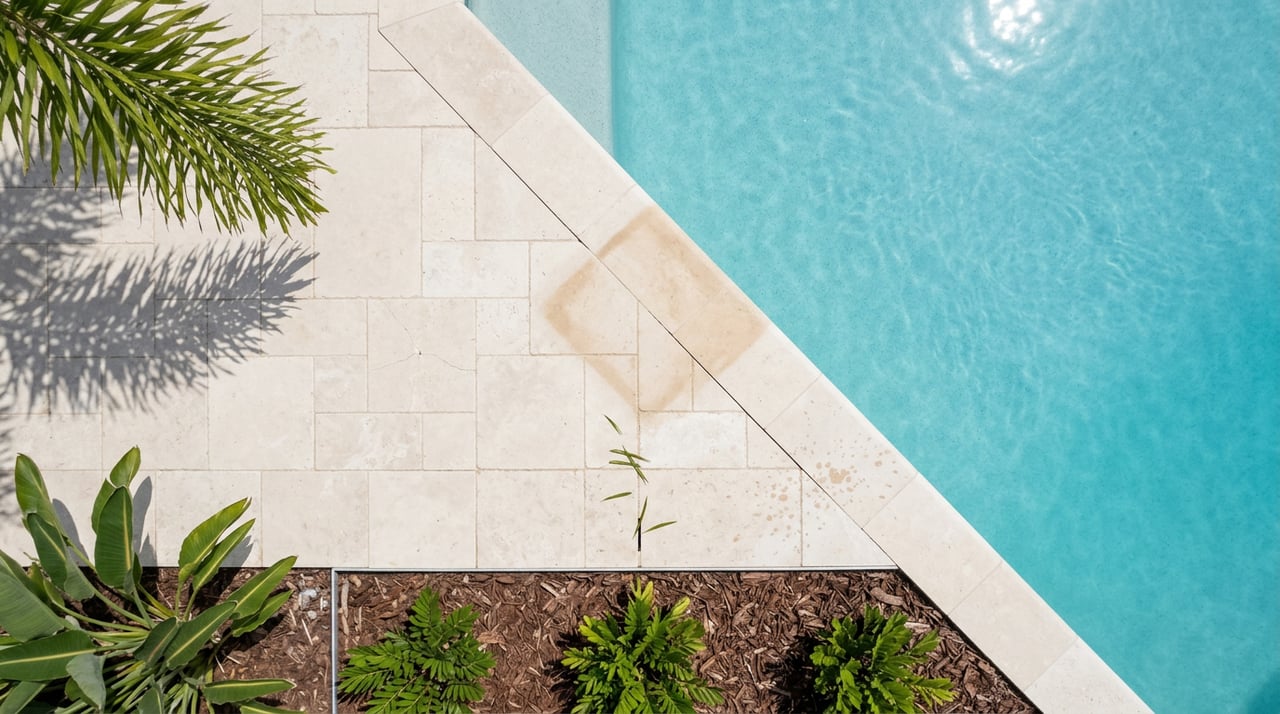
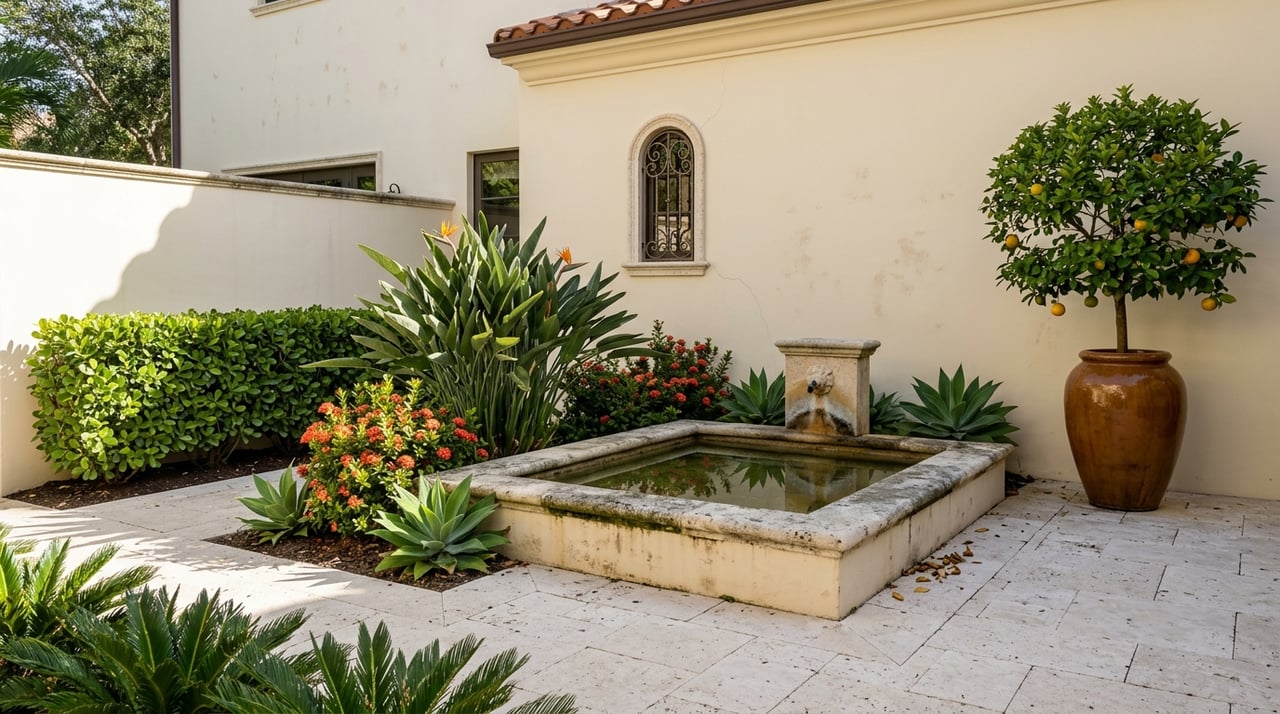
George Merrick platted Coral Gables in the 1920s as a planned "City Beautiful," and he hired architect Phineas Paist and landscape architect Denman Fink to enforce a specific vocabulary: stucco walls, red clay barrel tile roofs, arched openings, wrought iron, oolitic limestone quarried from the ground the city sits on. That vocabulary wasn't a suggestion. It was written into how the city still governs itself a century later, through a Board of Architects made up of at least seven local architects appointed by the City Manager and confirmed by the City Commission. The board meets every Thursday morning and reviews new residences, commercial buildings, pools, pavement, signage, roof tile, and building expansions before a permit can be issued.
What catches people off guard is the reach of that review once you own the house. The board's authority covers paint colors, window replacements, fence and gate installations, driveway and paver changes, accessory structures, and even mailbox placement and material. Interior work that doesn't touch the exterior envelope generally skips the board and goes straight to code review at the Building Division. Everything visible from the street does not.
The color palette is real, and it's narrower than most buyers expect
Coral Gables maintains an approved exterior palette of roughly 60 colors built around the Mediterranean Revival aesthetic: muted terra cotta, sand, ivory, dusty rose, sage, pale ochre. Bright white, primary colors, and anything high-saturation isn't on the list. Trim has to come from the same approved palette and contrast appropriately with the body color. Front doors get slightly more room, including richer wood-stain finishes, but they still need sign-off.
The submission itself is analog by design. The board wants physical paint samples, typically 8.5x11 brushouts applied to the actual stucco or wood, photographed in natural light. Digital color swatches don't count. That's not bureaucratic theater. It's the same standard the board has applied since the 1970s to keep block-by-block consistency from drifting, and it's why a color that reads fine on a laptop screen can still get sent back for revision.
The timeline math that actually matters
Here's the part that changes how you should plan a renovation, and it's the piece most guides gloss over: Board of Architects review and Building Division plan check are sequential, not parallel. You clear one gate completely before the next one opens.
| Stage | Typical timeline |
|---|---|
| Board of Architects review, per submittal cycle | 3 to 8 weeks |
| Number of cycles for a major project (new construction, additions) | 2 to 4 cycles |
| Plan check at Building & Zoning, after BOA approval | 6 to 12 weeks |
| A genuinely simple change (repaint, window swap, paver swap) | 3 to 6 weeks total |
Run the math on a real addition or a significant exterior remodel and you're looking at anywhere from a month and a half to nearly eight months of board review alone, stacked on top of another one to three months of plan check before a permit issues and construction can start. The board almost always requests revisions on the first submittal for anything beyond a straightforward repaint, so budgeting for a single cycle is optimistic even before the contractor picks up a tool.
This matters most in the neighborhoods where renovation activity is heaviest right now: the Country Club Section, Granada, Riviera, Cocoplum, Gables Estates, Gables by the Sea, and Snapper Creek, where older housing stock and larger lots mean bigger scopes and more cycles.
If you're buying and planning to renovate
A contractor's quote for exterior work almost never includes board review time, because that's a city process, not a construction schedule. If you're closing on a Coral Gables home with plans to add a room, swap the roof tile, or put in a fence, treat the design review and code review as two separate line items on your calendar, not one.
Before you close, it's also worth confirming the house you're buying doesn't come with unfinished business. The city's Records Department, reachable at 305-460-5210 or [email protected], can confirm whether a property's main permit, trade permits, final inspections, and required certificates are actually closed. A permit number on file isn't proof of completion. An open roofing or electrical permit from a prior owner's project becomes your problem the day you take title, and it can complicate financing or insurance down the line if it surfaces later.
If you're selling and want the exterior to show well
The instinct before listing photos is often a quick repaint to sharpen curb appeal. In Coral Gables, that instinct needs a lead time. Even a same-color touch-up requires board approval, and a straightforward paint case typically takes three to four weeks to clear once submitted, submittals are due roughly three weeks ahead of the Thursday meeting they're reviewed at. If your listing timeline is tight, that's a conversation to have with your agent before you schedule photographers, not after.
The permit-closure issue cuts both ways at the closing table. Buyers doing their own diligence will often check whether past exterior work on your home went through the board and the Building Division cleanly. A sale that stalls over an undocumented pool deck or an unclosed window permit is a slower, more expensive problem to fix under contract than it would have been to confirm before you listed.
The tax break most owners of older Gables homes never ask about
If your property carries historic designation, either individually or as a contributing structure in a historic district, exterior work generally routes through the Historic Preservation Board rather than, or in addition to, the standard Board of Architects process, with a Certificate of Appropriateness required for changes visible from the street. That sounds like more friction, and it is. But it comes with an incentive most buyers of older homes never hear about until it's too late to use.
Under Florida Statutes 196.1997 and 196.1998, owners restoring a designated historic property can apply for a Historic Preservation Ad Valorem Tax Exemption, administered jointly by Miami-Dade County and the City of Coral Gables. It freezes the assessed value attributable to the improvement, not the whole property, at its pre-renovation level for ten years. The catch is timing: it requires a Preconstruction Review before any work begins, along with before-and-after photo documentation and a recorded covenant to maintain the historic character for the exemption term. You cannot apply for it after the fact. If you're buying a designated historic property with restoration in mind, this is a conversation to have with the city before closing, not after the first permit is pulled.
A few questions worth asking before you commit to a timeline
Does the Board of Architects apply to every house in Coral Gables, or just historic ones? It applies broadly. Non-historic properties go through standard Board of Architects design review for exterior work. Designated landmarks and contributing structures in historic districts add the Historic Preservation Board and a Certificate of Appropriateness on top of that.
Can I find out if a specific house is designated before I make an offer? Yes. The city's Historical Resources staff can provide a written determination of a property's status, whether it's individually designated, a contributing structure, or neither, and it's worth requesting before you spend money on design work.
Is there any way to speed the process up? Submitting a complete package the first time is the single biggest lever. Physical paint samples, full drawings, material samples, and a project narrative that clearly ties the work to the Mediterranean Revival standard all reduce the odds of a revision cycle. Working with an architect or contractor who submits to this board regularly tends to shorten the process, since they know what gets sent back.
Coral Gables asks more of its homeowners than most Miami-Dade cities, and it does it on purpose. Knowing the shape of that process before you're under contract, rather than after, is the difference between a renovation that fits your timeline and one that quietly rewrites it. If you're weighing a purchase or a sale in the Gables and want a read on how a specific property's history or condition might affect your plans, the team at Jonathan Gilman can walk through it with you and help you get a clear picture of what you're taking on before you sign anything.